ASTRO: AMERICAN SOCIETY FOR RADIATION ONCOLOGY
  • Blog
  • About
  • Contact

MEET THE 2017 ASTRO ANNUAL MEETING KEYNOTE SPEAKERS: Richard D. Zane, MD

5/31/2017

 
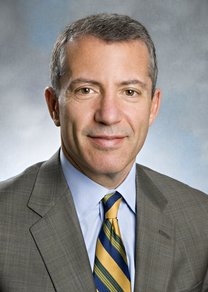
PictureRichard D. Zane, MD, will be speaking at the 2017 ASTRO Annual Meeting in September.

In this three-part post, we introduce our readers to the keynote speakers for this year’s ASTRO Annual Meeting, “The Healing Art and Science of Radiation Oncology.”
 
On Monday, September 25, Richard Zane, MD, chief innovation officer for the University of Colorado Health System, will discuss how technology has begun to restructure frontline patient-doctor relationships. He will also cover what we might expect in the future as our environment shifts to more of a population health-based framework.

In addition to his role as chief innovation officer, Dr. Zane is the George B. Boedecker Jr., and Boedecker Foundation professor and chair of the Department of Emergency Medicine at the University of Colorado School of Medicine; professor of health administration at the University of Colorado Business School; and executive director, Emergency Services, University of Colorado Health.
 
Dr. Zane has extensive experience in designing and implementing systems of quality, emergency care, access and clinical integration and has developed an international reputation for being able to apply modern industrial engineering and informatics practices to health care and science. Dr. Zane recently led a complete care redesign of the new emergency department at the University of Colorado Hospital. This new model of care has revolutionized emergency care delivery and is being recognized nationally and internationally—it’s being emulated across the United States, as well as Asia. 
 
An expert on systems of emergency preparedness and mass casualty care, Dr. Zane has been active nationally and internationally on issues related to emergency preparedness, surge and weapons of mass destruction. He recently authored the World Health Organization Hospital Emergency Response Checklist. The surge capacity and mass casualty planning and response tools Dr. Zane designed were successfully deployed in response to Hurricane Katrina and the earthquakes in Haiti and Japan, as well as the Boston Marathon bombing. He has also worked with and received funding from the Department of Homeland Security, the Office of the Assistant Secretary for Preparedness and Response, the U.S. Department of Health and Human Services, the Agency for Healthcare Research and Quality, the Federal Emergency Management Agency, the Healthcare Resources Services Administration and the World Health Organization for projects on hospital and system emergency preparedness.
 
Prior to coming to Colorado, Dr. Zane served as vice chair of the Department of Emergency Medicine at the Harvard Medical School and Brigham and Women’s Hospital and chair of the Medical Services Executive Committee, medical director for emergency preparedness and biodefense for Partners Healthcare and medical director for MDConnect, a systemwide integration, referral, access and transfer program.
 
Dr. Zane received specialty training in emergency medicine at the Johns Hopkins Hospital, where he stayed on as faculty at the Johns Hopkins School of Medicine before joining the faculty at Harvard Medical School and Brigham and Women’s Hospital in 1998.
 
Registration for the ASTRO Annual Meeting is now open. Register now or view the Online Conference Planner.

​What questions would you ask of Dr. Zane at the ASTRO Annual Meeting? Let us know in the comments.

Chiropractic care and radiation oncology: An unlikely partnership to improve the lives of cancer patients

5/22/2017

 
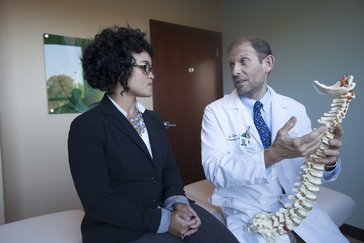
PictureDr. Jeffrey Sklar, a chiropractor who works with patients receiving radiation therapy.
By Jeffrey Sklar, DC

Radiation oncologists work tirelessly to formulate treatment regimens that will help their patients. Unfortunately, treating cancer does have side effects. In radiation oncology, consistent body positioning is paramount to ensure the most accurate treatment is administered to the patient. While radiation teams utilize customized immobilization equipment to help prevent pain or injury, patients may experience some discomfort. For instance, some patients that undergo weeks of radiation for breast cancer have been known to develop neck and shoulder pain related to the daily positioning of their body for radiation treatment. This musculoskeletal pain, sometimes called cervical radiculopathy, or a pinched nerve, may disrupt treatment because of its severity. It is undesirable for both the patient and physician to delay treatment due to discomfort.
 
When this type of side effect occurs, having the option of conservative, non-pharmacologic pain management from a doctor of chiropractic on staff can help manage the pain and get the patient back to treatment faster. In addition to the painful condition mentioned, other less painful but pertinent issues can arise. The stress of a cancer diagnosis coupled with the stress of receiving treatment frequently creates muscular tension. When this muscle hypertonicity is combined with lying in certain positions for extended periods of time during treatment, muscle discomfort can increase exponentially. Offering patients a more immediate sense of relief allows for continued care so the patient may return to their activities of daily living following treatment. Again, this is where the utilization of chiropractic for relieving muscular stress can benefit the patient immensely.

This information might lead us to ask the question, “Is it typical to find chiropractors working collaboratively as a member of a medical oncology team?” In short, the answer is no. It is uncommon to see chiropractors on staff in hospitals, let alone in a cancer hospital. However, as the field of integrative oncology has grown and evolved, there has also been increased focus on quality of life issues that affect the cancer patient population. This has created opportunities for more patient-centered and non-pharmacological approaches to addressing pain and discomfort in an already heavily medicated group of patients.

Some centers have been trailblazers when it comes to the focus on improving quality of life for cancer patients. The idea is that if oncology care is focused on treating cancer through chemotherapy, radiation and surgery, great attention must also be paid to improving function and reducing pain and discomfort with a paralleled and significant effort.

In a truly patient-centered model of care, the status of each patient is discussed daily at team huddles, allowing for better collaboration between providers. In those meetings, patient complaints are reported and appropriate actions are taken. In the case of a chiropractic referral, a radiation therapist may report that a patient complains of neck and shoulder pain from daily treatment positioning. This triggers a chiropractic order that is entered into the patient’s electronic health record. The doctor of chiropractic will then be contacted by a care manager that a patient has been added to the schedule, noting the reason for referral.

Currently, few health care institutions have successfully integrated chiropractic services into their models of care, and there is very little publicized collaboration or integration with chiropractors and cancer centers. However, with more than 70,000 doctors of chiropractic practicing throughout the United States, there is certainly opportunity for more patient-centered relationships to grow between these clinical professions.

It should be noted that not every chiropractor may be willing to treat cancer patients or is even equipped with the clinical experience, tools or “know-how.”  There are contraindications that must be addressed prior to any referral of a cancer patient to a doctor of chiropractic. In order to find a competent and willing chiropractic provider that understands the complexity of treating cancer patients with regard to contraindications to chiropractic care, it is best to consult with leadership from the American Chiropractic Association, state associations or state licensing boards for an appropriate referral.
​
It is important to continue providing new and helpful information toward improving quality of life for cancer patients, and to create useful interdisciplinary communication and collaboration to benefit those patients in need. Partnering radiation therapy services with chiropractic services is a step in paving the way for innovation and well-rounded treatment for patients.
 
Dr. Sklar is a Palmer Chiropractic University graduate. He holds the position of Director of Chiropractic Services at Cancer Treatment Centers of America in Philadelphia. Dr. Sklar also serves as District Director in Philadelphia for the Pennsylvania Chiropractic Association.


Meet the 2017 ASTRO Annual Meeting Keynote Speakers: Lucy Kalanithi, MD, and Heather Wakelee, MD

5/9/2017

 
Picture
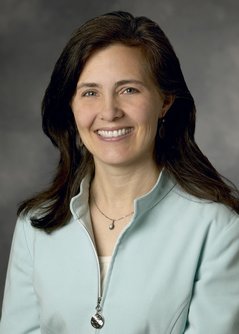
Lucy Kalanithi, MD, will speak at this year's Annual Meeting.
PictureHeather Wakelee, Paul Kalanithi's treating oncologist, will join the author's widow to speak about "When Breath Becomes Air."
​In this three-part post, we wanted to introduce our readers to the keynote speakers at this year’s ASTRO Annual Meeting, “The Healing Art and Science of Radiation Oncology.”
 
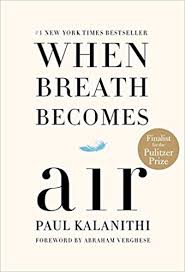
This year, in an informal “fireside chat” format, two Bay area physicians will speak about the national best-seller, When Breath Becomes Air, and the questions the memoir raises about oncology and end-of-life care. 

Lucy Kalanithi, MD,  is the widow of the late Paul Kalanithi, MD, author of the No. 1 New York Times best-selling memoir, for which she wrote the epilogue. The book centers on Dr. Paul Kalanithi’s diagnosis and his subsequent treatment of Stage IV lung cancer.

Dr. Lucy Kalanithi is an internal medicine physician and faculty member at the Stanford School of Medicine. She completed her medical degree at Yale University, where she was inducted into the Alpha Omega Alpha national medical honor society. Her residency was at the University of California-San Francisco and she was a postdoctoral fellow in health care delivery innovation at Stanford’s Clinical Excellence Research Center. At the cross-section of her career as a medical professional and her personal experience standing alongside her husband during his life, diagnosis, treatment and death, Dr. Kalanithi has special interests in health care value, meaning in medicine, patient-centered care and end-of-life care. She has appeared on 
PBS NewsHour, NPR Morning Edition and Yahoo News with Katie Couric, and been interviewed for People, NPR and The New York Times. She lives in the San Francisco area with her daughter, Elizabeth Acadia.

Dr. Kalanithi will be joined by Heather Wakelee, MD, an oncologist at Stanford, who was the treating physician for Dr. Paul Kalanithi. The two physicians will reflect on Paul’s introspective journey, which provides insight into the life and death questions faced by oncology patients and those who care for them.
 
Dr. Wakelee is an associate professor of medicine in the Division of Oncology at Stanford University in Palo Alto, California, and is the faculty director of the Stanford Cancer Clinical Trials Office. She has authored or co-authored more than 150 medical articles on lung cancer and other thoracic malignancies and is involved in dozens of clinical trials related to lung cancer therapy and diagnostics. Dr. Wakelee is active in multiple national and international organizations involved in lung cancer research, including serving as a member of the Board of Directors of the International Association for the Study of Lung Cancer (IASLC), co-chair of thoracic committee and Stanford Principal Investigator for the Eastern Cooperative Oncology Group (ECOG-ACRIN), and as a member of multiple committees of the American Society of Clinical Oncology (ASCO).
  
Registration for the 2017 Annual Meeting opens May 18. The meeting takes place September 24-27 at the San Diego Convention Center. 

​In the comments, tell us if you’ve read When Breath Becomes Air.  If so, what questions would you pose to Drs. Kalanithi and Wakelee at the Annual Meeting?

Picture
    Picture
    To learn more about our meetings, services and products, visit us at www.astro.org.

    Archives

    July 2018
    June 2018
    May 2018
    April 2018
    March 2018
    February 2018
    January 2018
    November 2017
    October 2017
    September 2017
    August 2017
    July 2017
    June 2017
    May 2017
    April 2017
    March 2017
    February 2017
    January 2017
    June 2016
    May 2016
    April 2016
    February 2016
    January 2016
    November 2015
    October 2015
    August 2015
    July 2015
    June 2015
    December 2014
    September 2014
    August 2014
    July 2014
    June 2014

    Categories

    All

    RSS Feed

Proudly powered by Weebly